Interviews
Interviews
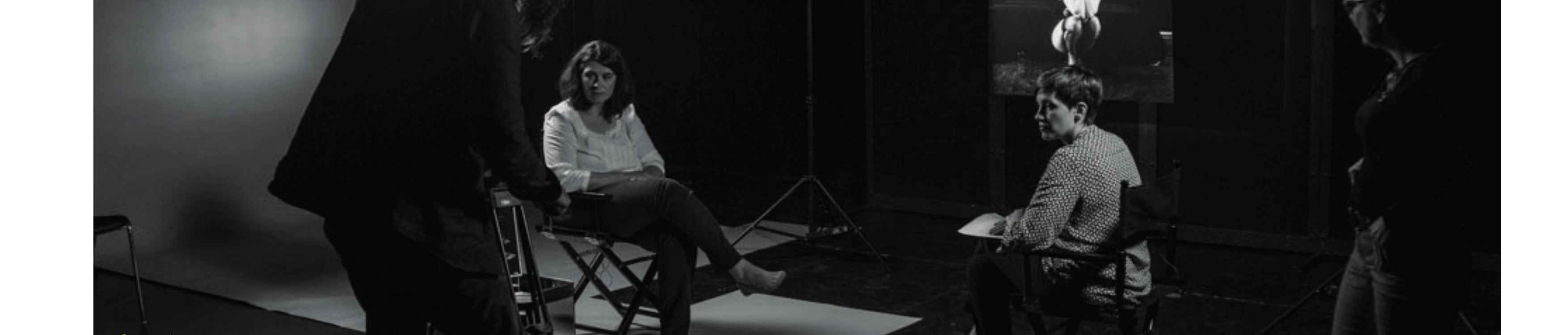
Interview - directed by Stéphanie Sphyras
Christelle Montagner- www.cursumperficio.net
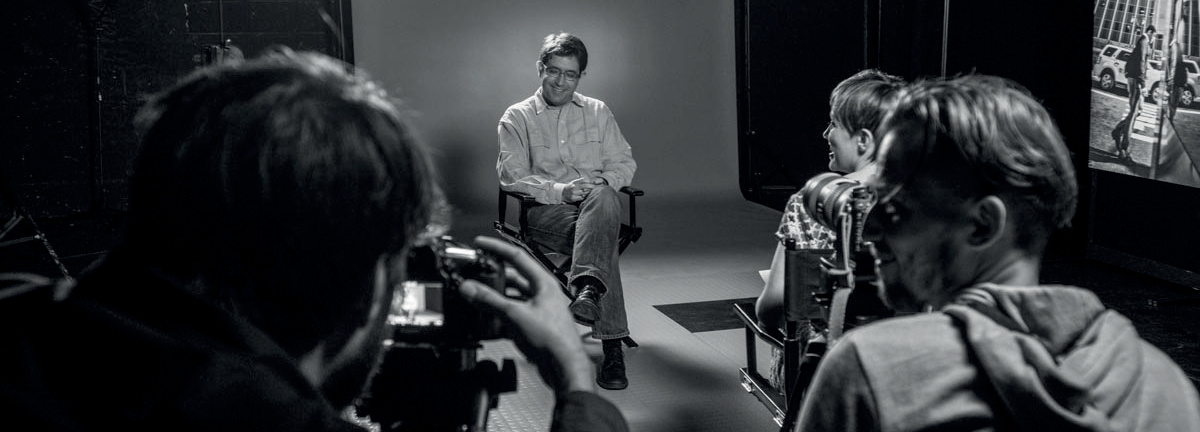
Interview - directed by Stéphanie Sphyras
Adrien Gombeaud - A Blonde in Manhattan
Interviews
Interviews
Interview - directed by Stéphanie Sphyras
Amy greene
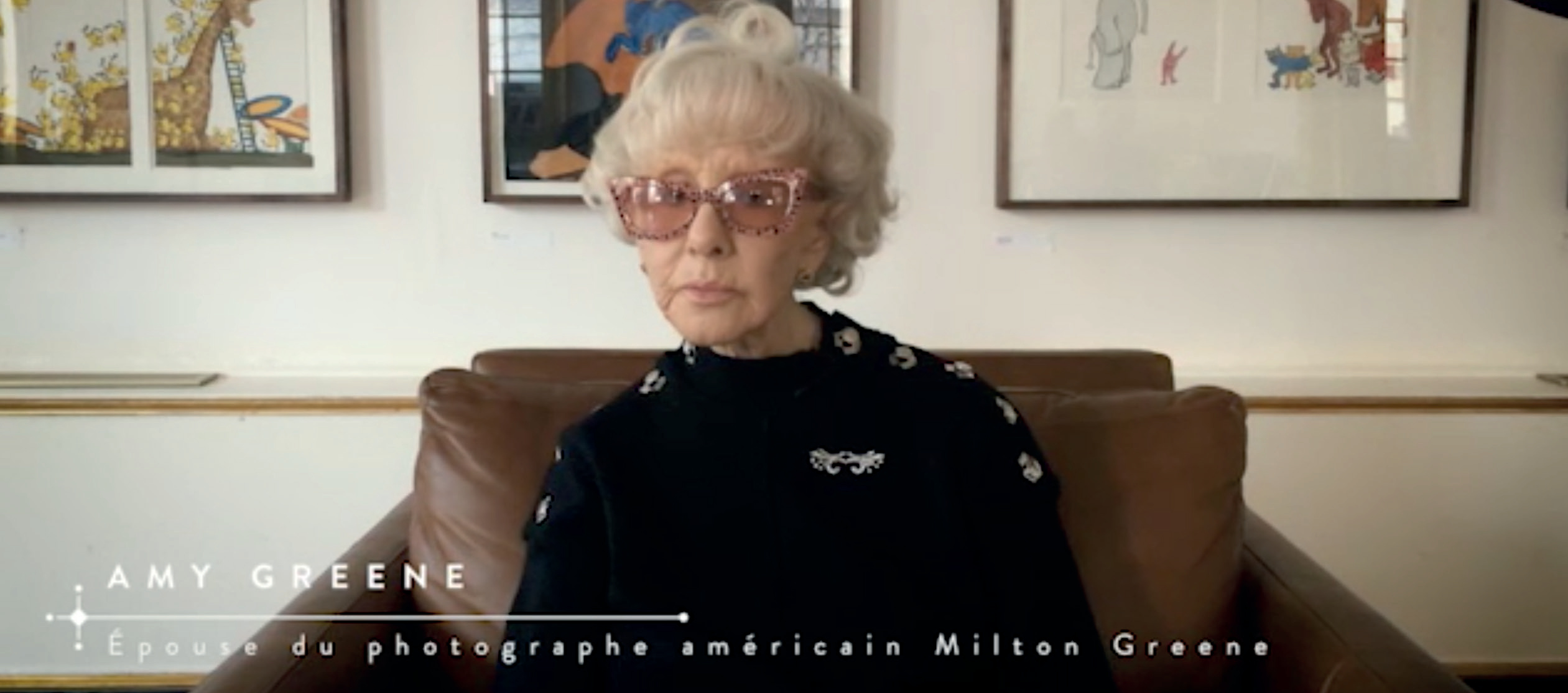
Video interviews
Adrien Gombeaud and Christelle Montagner
Interview - directed by Stéphanie Sphyras
Amy Greene
Interview - directed by Stéphanie Sphyras
Transcript - Interview - Amy Greene
Milton Greene and Marilyn
What is specific about Milton Greene's photographic work with Marilyn? On a human level as on a business level: they adored each other, they trusted each other. If he had asked her to do a cartwheel, she would have done it. She loved being photographed by him, because the photographs were of a beauty she had never seen before discovering Milton's work.
She had never seen photographs like this, so beautiful, so elegant. She looked at the portfolio and asked: who is this person? The editor of Look, who represented the magazine in Los Angeles, replied: a guy in New York, his name is Milton Greene. She said, well, I want him to photograph me. And Steve replied: perfect, because he wants to photograph you too.
This is how it happened. We both went to California; we were on our honeymoon, we had just gotten married, as incredible as that seems. How did Milton Greene's work differ from that of other photographers? Richard Avedon said it in few words: Milton photographs women like no one else in the world is capable of, including me.
He had a special relationship with women. And then he was an artist, a true artist, with an extraordinary spirit. What made Milton Greene get into production? And why did he take all these risks? He had reached that level, but he wanted to go even higher.
He loved cinema, of course, he had always loved films, he had grown up in a world of fiction, and he wanted to take the next step. She was enthusiastic about the idea of this company being created around her. You meet someone, you like them, you get to know them, and trust builds.
This was Milton's strength with all the people he photographed: whoever he photographed knew he would never hurt them. The word is trust. In 1954, Marilyn left Fox and came to your home in Weston, Connecticut. What memories do you have from this period? Do you have an anecdote to tell us? She would never have hurt me in any way.
Weston, Connecticut
So I knew there was nothing between them. A lot of people say I'm crazy, and that... She was fine. She was a young woman who was a sponge: she absorbed everything, from everywhere. During Milton's time running Marilyn Monroe Productions, you and Marilyn spent a lot of time together. What united you then? We became friends.
I didn't need to call her to ask her to go to the Met: she was in the room next to mine. It was a family atmosphere, and she loved it. Joshua was there, he was two years old; she loved him and he loved her. It was a shared happiness. I hate that it sounds so cheesy, but it's true: she's never given me any trouble.
First of all, I don't think she would have dared. And then everyone came to our house, to the countryside. Every Sunday evening, there were fifteen or sixteen of us around the table. Marilyn was there, she participated in the conversation and she held her place. I have a funny story to tell you.
One Sunday evening — Milton had built this table himself, he thought he was a carpenter — everyone was sitting around, and a guest said he was coming back from a funeral. We started talking about death. I said: very good, let's go around the table and let everyone tell us what they think. And it went from one to the other. Exciting people talking.
The turn has come to Marilyn. She said: I just want to be buried under a headstone that says 36, 22, 36. Do you know what that was? Her measurements. That's why she had this wonderful sense of humour. She received a standing ovation. There are beautiful photographs by Milton Greene where we see Marilyn with your son Joshua. How did Marilyn view him?
Marilyn Monroe remains a global icon, and many people have adopted her image. Was this phenomenon predictable at the time of Marilyn Monroe Productions? It was The Prince and the Showgirl, and she had never been happier than at that moment in her life. Moreover, Joshua Logan, the great director, the one whose first name Joshua Greene bears, said that it was his golden period.
He was the one who directed her in Bus Stop. Another very important thing: Marilyn Monroe Productions gave her the right to choose her director, something she had never had before. Again, it was Lew Wasserman, Milton Greene, Jay Kanter. All this was negotiated over the phone with Zanuck. Zanuck never understood her. Zanuck never liked her. He called her strawhead. But it doesn't matter.
The Marilyn Monroe Productions
How do you explain that Marilyn became an icon? This generation — no, not this one, the last two — seems to no longer have heroes like we had. So they need to make one. And Marilyn was there. She was dead before this happened. She would have been as stunned as the rest of us. Nobody understood this phenomenon.
Besides, one of our terrible friends, who thought he was a comedian, said when Marilyn died that it was a good career plan. And it was. If she had lived, maybe none of this would have happened. But she also surpasses James Dean. She surpasses Steve McQueen. It's at a level we've never seen before. Maybe a king or a queen.
Perhaps Queen Victoria, in the Victorian era. My son Joshua always says she died young. She died at thirty-six years old. And he's right. It's still this image of youth: Dean, Elvis, Jimi Hendrix, Janis Joplin. If we want to bring them all together: Mozart, thirty-six years old. Modigliani, thirty-six years old.
There's a reason these people become icons, and I think it's on to something: they died young. No one could see their faults. Arthur was jealous of Milton. Not about Milton as a man, but about the time Marilyn and Milton spent working together. Arthur couldn't stand it. It was beyond his strength.
He was possessive, and he felt it was his time. Well, they were making a film, all the same. Let's be charitable: Arthur has three children, and I don't mean to be mean. Let's just say he was no match. He couldn't handle what Kanter, Greene and Wasserman were handling. He didn't understand. It wasn't his job, it wasn't his means.
If he had gone and sat in a corner to write, he wouldn't have bothered anyone. We prayed for that: God, let Arthur go and write a play. But no. He came to the set. He came into the dressing room. He was picking her up, and she didn't want him. She really didn't want it, because she was working.
Becoming an icon
When Laurence Olivier is directing you, you have to be attentive, even when you don't feel like it. And Arthur had become impossible. This is what got the better of Marilyn Monroe Productions. I had an unhappy husband. I had a husband who didn't really want to do what he did. We lived very well, we lived magnificently from his talent, we were accustomed to a very pleasant life.
And suddenly there was an unhappy man at home. Years later, during the filming of The Misfits, my friend Eli Wallach, whom I adored — a very well-known actor in New York — was on the set: he played one of the characters. At one point, Marilyn turned against Arthur. They argued constantly on set.
She turned against him, she started shouting, reproaching him for this and that. And she said, among other things: you even took from me the only person I trusted in my entire life. You took it away from me. Arthur replied: What are you talking about? Marilyn said: by Milton Greene. Why isn't he there? Why isn't he on this set? It was Eli who told me about it.
You have your answer. Wait, let's start from the beginning. I dreamed of Marilyn, and she was calling for help. I wake up my husband and tell him: take a plane and go see her. He replied: you've lost your mind, we're going to Paris in three days for the collections, what do you want? It's impossible, I'm packing my bags, I'm leaving. I said: very good.
If you don't want to go see her, call her. So he called Arthur Jacobs, who was the press officer, and Arthur immediately gave him the number. They spoke for three hours. Not an hour: three hours that day.
Then she called him back the next day, they spoke again and they set up a meeting: at the end of the collections, he would take the plane by the Pole and go to Los Angeles, and I would return to New York. It was agreed. And you know what happened. Do you know what was said during these conversations? No, my little one. I left the room, it was none of my business.
Arthur Miller
I was sure of myself at this point. Exactly. No. They were partners. Likewise, I didn't listen: I left the room when he was talking to announcers. I'm not that kind of woman, never have been. I feel very good like that. So she was in a cocoon, and the butterfly was coming out of the cocoon, along with all those around it.
And she loved it. She had no problems except Arthur. Well, okay, I'm not going to talk about Arthur: the day is too beautiful. Arthur could never understand the relationship between Milton and Marilyn. Never in his life could he have understood her. And Marilyn Monroe Productions was fifty-one percent Marilyn.
It was Milton who did this, along with Lew Wasserman and Jay Kanter, so that she would have the majority of her own production company. Arthur did not understand why Milton Greene owned forty-nine percent of Marilyn Monroe Productions, because he never knew what Milton did on a daily basis.
One day, Gene Kelly came to the house and he said: I came back from Paris, I saw a play in French — Gene spoke French — Irma la Douce. I optioned it, and we're going to take it to Broadway. Milton said: absolutely. Marilyn was taken into confidence that same evening, and was told that she was going to play Irma la Douce on Broadway.
What is Sweet Irma? She loved it. A prostitute, this, that, in love with a policeman, and music. She was delighted. This is the protection that Milton Greene gave her, and which Arthur never understood. It was daily, hourly, constant protection. How was she a modern woman? She became a feminist.
She suddenly started asking questions and demanding answers, from Zanuck and from everyone she spoke to. She loved Carl Sandburg, she went to meet him in Chicago.
A modern woman
One very important thing: The first time Marilyn picked up the phone to tell someone "I demand that you do this" was when she learned that her favorite singer, Ella Fitzgerald, was scheduled to perform at the Crescendo and that they didn't want her, because she was African-American. Marilyn picked up the phone and said, you have to let her come.
And if you do, I'll be there every night. She was there every evening. And she and Ella became friends. It was there that she first became aware of her power. One evening we went to see Sinatra at the Copacabana. The room was packed, you couldn't have fit a toothpick in there.
We were coming out of a big press evening: she wore a white satin dress, white satin shoes, a white mink coat, shaved mink, diamonds. She looked like a movie star. And I tell him: don't count on it, we'll never get in. They know Milton, and if they told him no on the phone, we won't come in. She asked me: how badly do you want to come in?
I replied: I'm in love with this man, so of course I want to come in and see him. She said: okay, follow me. We leave the party, we enter the Copacabana — not through the kitchens, as usual: if you remember the Goodfellas scene, that's how we entered. But this time we went down the stairs.
There was a small landing before the last three steps. She stopped there, without saying a word. Me behind her, Milton behind me. She stayed there. And everyone turned in that direction. Frank was on the other side, and he realizes that something is happening, because no one is paying attention to him anymore. He asks: what? Who is it ? What is happening?
He stops the show. I was very impressed. I said, okay, I owe you one. A mistake. Just a mistake. Milton and I... We've been asked this question forever. She simply took the two extra pills, the ones she should never have taken, because she had forgotten that she had already taken them three hours earlier. It was a mistake. The Cubans were not after her.
The gangsters weren't after her. The Kennedys weren't after her. It was a mistake, period. Only, an error, there is nothing romantic about it. So of course, no one wants to believe it. She was wrong. It's that simple. She was wrong. It was not premeditated. Because she had those three conversations with Milton.
What she left
She died while we were in Paris, for the collections. He thought she was happy, he thought she was safe, and they couldn't wait to see each other again. If she hadn't died, I'm sure Marilyn Monroe Productions would have left again. But that never happened. A mistake. Sexual freedom: I believe that this is its real contribution.
I don't think she knew what she was doing while she was doing it, but this sexual freedom that is everywhere today — except in the Middle East, but let's not get into that. Be happy with your body. Love your body. Take care of your body. Be sexy. Everything we see today, which is excessive, is already too much: there is never a happy medium, it is always too much or too little.
So I believe that what she brought to the world in general was sexual freedom. Blonde hair: more women have dyed their hair blonde than even in Jean Harlow's era. They hadn't done it as much as with Marilyn. Let's not forget that Betty Grable was blonde. We have always liked blondes.
Jean Harlow was beautiful, everything about her was beautiful: if you watch a Jean Harlow movie, look at her feet, her ankles, her legs. They are magnificent. Betty Grable, same. Every woman has something to give to cinema. It's their job, and it's what they have to do, because that's why they get paid a lot of money. So there was Harlow, then Grable, then Marilyn.
Dietrich was in a world of her own: Dietrich was never said to be a blonde, if you know what I mean. She was blonde, but she was something else entirely. Who else comes to mind? Eva Marie Saint, in the sixties. But then again, she wasn't sensual enough for that.
So I think what she left is that you have the right to dye your hair and be blonde, if that's what you want. She gave women their freedom. Women are great, but we don't know it. We haven't understood what we are worth, really. We can do anything.
Transcript - Interview - Adrien Gombeaud and Christelle Montagner
Writing a Blonde in Manhattan
What made you want to write A Blonde in Manhattan? I was looking for a book topic. I wrote a book called The Man from Tiananmen Square, which was a book about this man who stopped a column of tanks in 1989, in Tiananmen Square, in Beijing.
I wanted to continue this work on photography, since the book was essentially about these photographers who had captured this moment and how the photo had evolved over time to become an icon, a poster, diverted in a thousand ways.
A few years before, I had purchased a Marilyn Monroe photo book, which was a set of photos taken in 1955 during Marilyn's stay in New York. Curiously, in this book, there was a text which spoke a lot about Marilyn Monroe and which said perhaps three lines no more about the author of the photos, the photographer Ed Feingirch.
I understood that there was an interesting subject because the photos were very well known, there was in particular in this set the photo of Marilyn putting on perfume with a bottle of Chanel number 5. I was thinking who could be this man who took such well-known photos and in the photo album itself, there are not three lines about him.
My idea was to confront this extremely photographed woman, this extremely well-known silhouette, this anonymous photographer. That's how I started looking into who the man behind the photos was. There were two reverse books, ultimately. On the one hand, a very famous man who stops a column of tanks and whom everyone knows but whose identity no one knows.
And on the other, an extremely well-known subject, but here, it is the photographer who is unknown. Have you encountered any difficulties? A lot has been written about Marilyn Monroe, there have been a lot of books. That is to say, overwhelmed by the weight of the myth and in relation to all the ideas received or not that we may have?
Not really because for me, it wasn't just a book about Marilyn Monroe. That is to say, Marilyn Monroe is a character that interested me a lot, but what interested me was this meeting between Ed Feingers and Marilyn Monroe. And the difficulty was rather finding information on this photographer. Marilyn, there were a lot of things on hand.
It was rather relaxing for me, in front of this completely unknown figure of Ed Feingers, to have in front of me a lot of documents on Marilyn. The difficulty was to sort things out and not let myself be absorbed solely by Marilyn and not make a book that was about Marilyn or that copied other biographies of Marilyn that I had read elsewhere. So no, it's more at the exit.
It's very curious, when we release a book on Marilyn, to become, basically, an element in an enormous machine and to see that there will necessarily be 15 books afterwards, that there will be 850 before, and that we are only a small point in an enormous library devoted to Marilyn Monroe. That's very, very strange. This has never happened to me on any other book.
We have the impression, when we read the book, that you are telling us a big story, through a small story, through portraits of people, through humanities, is that what interests you, ultimately? This is the story of a week. But this week, she actually says a lot of things.
I am quite convinced that a good way to perceive people is to focus on limited moments in time or on a single aspect of their personality.
That is to say, I don't really believe in these biographies, especially the American biographers, which are enormous, which are full of details and where we learn the number of bars that the bed of the kid who would later become a great artist had. And we make paving stones like that, which is, as they say, the definitive biography. For me, it's impossible to do. People's lives are too complex.
On the other hand, if we manage to isolate, whether it's five minutes in the story of the local man or a week in the life of Marilyn, I think we can learn a lot of things through that. Well, that's what I believe. And this time spent with them, finally, at the end of the book, after all this time, with their ass, what did it mean to you?
I think it started out as a book about Ed Feynger and Marilyn Monroe, but beyond that, it's a book that talks about time, about the way people fit into their times. And this is what I realized only afterwards, and in particular the evolution of techniques. That is, what killed Ed Feynger?
It's the fact that he clung to a world that had collapsed and that he continued to take photos as in 1955, as we entered the 60s, that he refused to do colour, that he did not adapt to the new format of magazines and that he continued to do something which, in any case, no longer existed.
Of course, we know what she died of, addictions, etc. But for me, she is someone who remained frozen in a cinema, which is this great Hollywood cinema, which ceased to exist little by little after her death. That is to say, it is impossible to see Marilyn other than in this great, magnificent Hollywood cinema.
We cannot project it in the cinema which will be the cinema of the 60s and even less of the 70s. So if we want to survive, we must adapt to the times. You can't be stronger than time, even Marilyn Monroe, even Eddie Feingart. And both of these characters died physically because they refused to move on, to move on to the next step.
In your story, you really choose a particular moment in Marilyn's life. Can you tell us about this moment? Yes, so it's the year 1955 and it's a breakout year for her, since she's very well known. She is under contract with a major studio.
She could have a career as an actress under contract and she chooses to break this contract illegally to go and found her own production company in New York. And it's something... Of course, there were actors who founded their production companies at the time. Everyone tries to do that, from John Wayne to Marlon Brando, but she's a woman.
And she's not an actress who's known for having the charisma to do something like that. What she does is a very violent move to take a plane illegally and move to New York to set up a production company and become not only an actress, but also in film production. For her, it's perhaps the happiest year of her life, I think, the year 55.
Marilyn and Fenger, it's an improbable meeting, but what binds them both? She has the intelligence to say to herself that it's someone new, I'm going to play the game. What makes him want to play the game too? If we try to see these two characters, what do they have in common?
That is to say that Marilyn Monroe was often said to be late for her shoots, etc. It's true, but it's someone who knows photography. Maybe instinctively, maybe not theoretically. She took a few photos herself that weren't great, but she knows photography very well, at least as well as she does of Fenger.
When you see the way she poses, the way she plays with the camera, she is perhaps the greatest model there has ever been, beyond her acting career. When we see what she has left to the history of photography, it is considerable, there is not one photo similar to another.
And so I think she knows how to recognise, by the way Fenger moves around her, the way he positions himself, that she is facing someone very gifted. And so there is recognition.
And himself, I think he also sees that he is facing an extraordinary model, that he will bring him something new and that he will add something new to his career as a war photographer and reporting photographer.
So in my opinion, there is a mutual respect which is contractual, that is to say what is fascinating in the last photos of the report where we see Marilyn on an elephant during a charity gala, is that Fenger returned to what he was with the photos of the skirt, that is to say a photographer among others.
But nevertheless, for a week, and that's why she agrees to follow him to places where she doesn't usually go, there is a mutual respect between two very great professionals. I think that this is first of all what is linked, it is very American in fact, this idea that we are there at a top level of photography and of the model or the actress.
And then, moreover, but they didn't have the time in a week to discuss this, they are linked simply by their era, that is to say that they are both representative of their era, not of the same aspect of their era. Marilyn Monroe is representative of this great American cinema, musical comedies, Technicolor, etc.
And he, from the beginning of photojournalism, with his small cameras and with the reality that we can confront with these new techniques and these field photographers who really emerge in these post-war years, during the war and in the post-war period. So they are also linked by this era, they are two great professionals from the same era.
Marilyn Monroe, she seeks to be in the present moment, to be in the truth, and finally, to be at the end of the war, he also seizes the present moment. Are they not bound by this research?
I think that indeed, there is that, that is to say that in her reinvention, what weighs on Marilyn Monroe at that moment in the context of Hollywood, where she is the biggest star, in any case with Liz Taylor, one of the biggest stars, is this very heavy filming format, with long hours of waiting in the studios which creates anxiety for her, while he is in the snapshot.
That is to say, if he were a filmmaker, he would be John Cassavetes, he would be someone of improvisation, who comes out of the studios, who is in the street, he embodies a certain form of freedom that she came to seek in New York, him as a photographer, because he is that type of photographer.
Norma Jeane and Marilyn
And so they are effectively linked by her desire to move towards that, towards the improvisation of the studio actor, towards spontaneity, and he is that, totally, both as a photographer and as a man in his personal life.
There is a freshness, there is an intimacy, and it's all in the vision that Endfanger, Schade, Maréline, do you like that, did it touch you or not? Yes, of course, but anyway, it’s an aesthetic that already touches me.
This black and white, this spontaneity, I love John Cassavetes' films, I find the way Cassavetes frames Gina Rowlands to be extremely moving and moving, and I love the way Fanger looks at this woman. So this freshness, this spontaneity is really magnificent. There is also a lot of humour in these photos.
I find that Maréline is seen too often as a tragic character, and this is undoubtedly linked to the end of her life, but we see real moments of joy in these photos. So I am also touched by that, by the idea that he is able to see Maréline as someone joyful, amused, and this city of New York as a reservoir of energy, of spontaneity.
It's this meeting of all of this that makes these photos truly moving. And in your book, you talk about a pact with death that binds these two characters. What would you tell us?
That is something that will come later, this idea, since they will both die very young, that they will, so to speak, not know the 60s, and that this way of living in the present moment, that is to say that really when you are, like Feingarsch, at this point in the present, you basically cannot last very long, because it is exhausting not to plan the future, not to be interested in the past.
Feingarsch is someone who fell into oblivion as a photographer because he never archived his negatives, because he never did any classification, so he never thought about posterity. All he cared about was the present moment. What interested him was to take a photo, publish it in the newspaper, and then, for him, the photo no longer existed, we moved on to something else.
And these moments of spontaneity are also those of Marilyn Monroe, that is to say the most extraordinary photos of Marilyn Monroe, that is to say that really, she is there, in front of us, alive, and that's what makes her fascinating, but that's what's exhausting.
You can't live long by only living in the present, it's impossible, and these two had chosen to live like that, and inevitably, it meant a very short life. And Feingarsch is consumed, at the end of his life, he fell into alcoholism and into alcoholism which leads to suicide, and Marilyn for you too, is she consumed or not?
People who really went to excess with drugs and alcohol, which led them towards death, now, it's not that exceptional. That is to say, I realized, while looking at Feingarsch's autopsy report, that at the time, the relationship with medications was not at all the one we have today.
I'm not sure that by taking all those sleeping pills and drinking all that alcohol, I was aware in 1955 that it was a path to death. It was a path to excess, for sure, but we weren't there yet. I know that in Hollywood at the time, there were even doctors who prescribed LSD.
We know that Gary Grant was a user of LSD, but completely legal. That is to say, I think that this is a time where science is seen as something necessarily beneficial and therefore drugs cannot kill. So of course, when you look at Ed Feingarsch's drinking and his drug use, Marilyn Monroe's crazy drug use, they were definitely going to kill themselves.
It's obvious, but seen from today, I'm not sure that people were aware at the time, when they took all this, that it was the sure path to downfall. What is certain is that it is still a form of self-destruction, that is to say needing to sleep and that is not normal, even if we have an extremely tiring life.
There is something of the desire to erase yourself from the world when you take on so much. We are in a particular period, we are in the cinema of the 50s. How could you describe to us this cinema of Marilyn, the cinema of this era? It’s studio cinema first and foremost.
We are at the end of the golden age of studios, that is to say where the stars are really under contract with a studio which is very powerful and which has absolute power over the lives of the stars. What will happen, and Marilyn is very pioneering at this level, is that the stars will become independent, create their production company and therefore have real power.
This will be the birth of the power of stars and in particular of agents. And we're not quite there yet. Marilyn is trying this crazy move of creating her production company, but we are still at a moment where the stars are producers, big studio bosses.
We are not yet at that moment where there will be an independent East Coast cinema and a Norman West Coast studio cinema. This will start right after. Right after Marilyn. So she is the last great icon of this studio cinema. Finally, who was Marilyn's great rival at this time?
I think her great rival is essentially Elisabeth Taylor, but who is basically very different from Marilyn. She's a very interesting actress who will take risks. She too, Reflection in a Golden Eye for example, is a very complex film which is not given to just any actress. She's a great actress, but she's a true Hollywood star who has no ambitions outside the studio system.
Moreover, there are two actresses of the time who will become icons painted by Andy Warhol. Hollywood is Elisabeth Taylor and Marilyn. I think these are two characters that relate to each other because they both embody an era, but they embody very different aspects.
For me, Elisabeth Taylor is an actress that I'm less familiar with, but she's Cleopatra, that is to say she has this calm side, while Marilyn is really a very great musical comedy actress. Marilyn has the voice of a jazz singer. We forget, even if we often listen to her songs, that she was also a very great singer.
There is something quite modern in Marilyn's voice. Marilyn is a dancer. Liz Taylor doesn't have a dancer's body, so I think that on the one hand, we have a queen, which is Elis Taylor, Cleopatra, and on the other hand, a more twirling character, which is Marilyn Monroe. And the real rebel, deep down, is still Marilyn. And how would you characterize Marilyn’s voice for you?
What does it mean? It's a voice that is very worked to begin with. She was able to have an acting voice. That is to say something very calm, very calm, very sweet, very sensual too. But it is a voice that also evolves as the films progress.
I believe that the voice of Marilyn in The Misfits is not quite the voice of Marilyn in some Lamb Show or in this year of reflection. So it's definitely an actress' voice. Just like her body was worked on, like her haircut. I think she managed to find a very special and unique voice.
It is very recognizable, the voice of Marilyn Monroe, as much as her face. And why do you think it became a myth? First of all, I think she's a great actress. It's something we don't say enough.
But there is something very, very strong when we see Marilyn on screen what happens, then she had a short life and at the same time filled with twists and turns, extremely interesting things. She lived through an era that still fascinates today. She took a lot of photos. We are still discovering photos today that we did not know of this woman.
So she offered herself to the photographic lens that very, very few actresses have done, maybe even none. She embodies a completely original and new heroism. And then, through her death, which some try to explain endlessly, she remains alive, that is to say that there are always new theories which are developed depending on the times. And all that makes him someone immortal.
Besides, he is someone that each generation can use and find new things. It's a bottomless pit. And that means she is always present among us. He's someone immortal who we will never know, in fact. Yes. I think we can know fragments of Marilyn Monroe, things that interest us.
I think, well, in one week of his life, I understood what that week in his life was like. But it's just a week. What happened before? What happened next? There is no possible definitive biography of Marilyn Monroe. It's pointless, in fact, to try to encompass this whole myth. There are always new things emerging.
And then, we can reread this myth based on the present. And I think that today, when we look at Marilyn Monroe since 2014, Marilyn Monroe tells us something about our contemporaries today. That is to say, the way we look at this woman who now comes from another century also reflects something of ourselves. And have you read the book Marilyn Monroe, Unfinished Confessions, by Benecht?
It's a book that I like, but the book itself went through such a journey, before being published, that we can no longer separate the myth from the reality. In this sense, it is a book that tells us about Marilyn, but Marilyn as a myth, not Marilyn as a person. At the same time, he shows us behind the scenes, he shows us the hidden side of Marilyn.
In this book, he shows us that we don't know everything she had to endure in terms of conflict to become this world star. He really goes behind the scenes, Benecht, when he writes his story with Marilyn. Yes, but at the same time, he is writing the myth of Marilyn. That is to say, all of Marilyn Monroe's pain is part of the Marilyn myth too.
Marilyn also has a martyr aspect which is very important, hence the desire of the fan or men to protect Marilyn, who absolutely does not need protection since she manages as an icon to survive all this time. Therefore, the very difficulties of Marilyn Monroe and the very suffering that she can express also construct the myth of Marilyn. There is no other side to the Marilyn myth.
The image and the photographers
Everything constitutes the myth of Marilyn. Is she a transgressive woman for you, Marilyn? In a way, yes. I think that's the modern take on Marilyn, let's say, in recent years. We realise that Marilyn Monroe opened doors, including in 55, by creating this production company. Even if this company fizzled out and was not successful, there is still an extremely modern attempt.
A relationship with nudity too, which for its time was completely revolutionary. She started her career with nude photos and she ended them with a very nice nude session too. She has a relationship with her body that is completely new. A certain form of independence too. When we take the famous sequence from Happy Birthday, Mr. President, it is incredibly insolent.
Today, it's a classic sequence, but you have to see at the time the impact that a moment like that can have. So yes, I think she was a character, if not a feminist, at least someone who opened up something new. And the sequence where she sings Happy Birthday to the president, so we will never have a single birthday again without thinking of this song. For you, is this transgressive?
In any case, it's new, that is to say that we have never addressed the American president in this way. Afterwards, what Enedi did too, it seems that it made him laugh a lot. But in any case, we are in a situation where a woman imposes herself like that on a man. It's Kennedy's birthday, but basically that date will only remain Marilyn Monroe's Happy Birthday date.
She stole his birthday. Everyone would have forgotten this birthday if it hadn't been for this little Happy Birthday moment. So it’s a way of asserting oneself that is totally, if not transgressive, at least new. Yes, it's true.
And at the same time, it's very curious because there is something tragic also because she is in the last moments of her life, Marilyn Monroe, at that moment. It's also her farewell to New York, even if she doesn't know it yet. She won't come back to New York after that point. His production company project failed.
She had to come back to Hollywood, come back to the studio, reshoot films that weren't necessarily close to what she had at the time of 55. So there is something sad also in this Happy Birthday. We are still in this dichotomy basically. On the one hand, she is bursting with joy. We see, she raises her arms. The light falls on this incredible dress.
He made 2000 lights shine. And on the other hand, there is something sad. It's this relationship with Kennedy that is still terrifying. It’s this great American aristocracy.
And there, suddenly, in front, it's this girl who worked in the factories, who started from nothing, who became the biggest star in the world and who is not accepted by this Kennedy clan. She says all that through this Happy Birthday.
It's joy, sadness, farewell to Kennedy, farewell to New York, all of that in these few seconds. Really for you, what is Marilyn's favorite film, from this cinema? I still think in The Misfits, the sequence with the horses where she realizes that suddenly these horses are going to go to the slaughterhouse and where she shouts, you are all animals.
It's still a heartbreaking sequence. That is to say, she is at the top of her game as an actress. In The Misfits, she is extraordinary. There is something absolutely unique about this ghostly film. And in this sequence, we see this little being all alone with his mustangs which makes this sequence absolutely heartbreaking.
Now, in the singing sequence of Diamonds, Our Girl's Best Friend, it's still extraordinary also on the musical level of gestures and we see Marilyn dancing, moving. That too is wonderful. If for you, she were a character in a fairy tale, which character would it be? He has been compared a lot to Sleeping Beauty because he is someone who posed while sleeping.
There are photos of Marilyn sleeping, some by Ed Fine Gersh which are very beautiful. So there is this little grace that can be there. Cinderella because I believe it is the myth of transformation that is part of Marilyn. Marilyn, everyone knows she's a fake blonde. He is someone who has built himself up.
There is something very American about this idea. She is a slightly curly fake blonde where she poses as a shepherdess which are a little kitsch and quite curious photos and we see her gradually becoming and transforming into Marilyn Monroe. And so there is this idea of the pumpkin transformed into a carriage and which compares it to a fairy tale.
And if Marilyn were the character in a painting, what painting would it be, what universe would it be in terms of painting? We can think of the Mona Lisa because basically, Marilyn, like the Mona Lisa, has this very curious iconic destiny where her image will be transported onto objects, posters, where it will ultimately go beyond the framework of herself. The Mona Lisa, there’s a bit of that.
When we see all these people, when we go to the Louvre, crowding around this little painting and trying to look, we don't really know what, this idea that there is a mystery, we don't really know who it is. Was it a man, was it a woman, the Mona Lisa? This idea of a slightly blurred look.
And this crowd of worshipers, perhaps yes, is a kind of Mona Lisa of the 20th century. Can we say that Marilyn belongs to a time, after all? Is it representative of the 50s or does it not belong to any era? What time is Marilyn in? That is to say that she is the great actress of this cinema of the 50s and at the same time that she contributed to making it do something else.
That is to say that of course, she is the great actress of the time and at the same time, she is already ahead of her time. She foresees a type of woman, of free actress that there will be afterwards. But at the same time, she stayed there because she died and because she didn't make a film later.
Musically, she is still in something that is jazz or Broadway. And at the same time, when we see the Happy Birthday sequence, there's almost something already rock'n'roll about it. It's very curious to see that she inspires, that lots of people try to imitate her afterwards. Madonna wore wigs and all sorts of things. We saw Scarlett Johansson recently.
All kinds of new people keep coming back to Marilyn. It is modernized by these people who imitate it. And at the same time, these people are trying to capture something of the glamor of the 50s through this icon. Do you think it could have evolved in another era?
If Marilyn had aged today, if she had remained alive, would she have been able to adapt to the times that would follow? What would her life have been like? It's very complicated to answer this question. Because we can't imagine it any other way. We can't imagine Marilyn Monroe in a Woody Allen film. It's really impossible. And at the same time get used to the impossible. And at the same time, there you go.
Could she have aged like Liz Taylor, become a sort of living myth, or stopped acting like Greta Garbo and devoted herself to something else? She still loved this profession passionately. So it's unlikely. We cannot project ourselves. Marilyn remains forever associated with her youth too. We can't imagine her getting old. How do you think Marilyn would view our world today?
I think she would be happy to be able to make different films. That is to say, this idea of a production company which was a utopia which was never able to come true, the idea that it could today address all kinds of artists to develop its image. She wouldn't be locked into a studio system like she was back then.
An actress today, as famous as she is, can break out of a system, if she obviously inspires other filmmakers. I think that she, even a little later, could perhaps have done a Godard, another Marilyn Monroe in the New Wave. Today, I think she would quite peacefully enjoy the freedom that comes with being able to travel and try various things.
You weren't struck by all the treatment she received, all the people who were allowed to write lots of books about her with nonsense most of the time. What does that mean to you... That's striking. We need to take Marilyn Monroe, make her a fictional character and invent all kinds of things, often quite degrading.
It's very curious, this desire to violate this character a little. But what is striking is above all to see that Marilyn survives all of this. That is, it can be used in advertisements. There were wine brands. There is still a Marilyn Merlot that was produced in the Napa Valley.
There have been amazing things with Marilyn, ugly objects that have used her image. But it never damaged Marilyn Monroe. Never. That is to say, basically, it’s like a play. You take Hamlet, you stage it any way you want. You do something astonishing on stage or in film based on Shakespeare. It survives everything.
In this woman who was described as fragile, there is a solidity which makes her resist all the stupidest treatments that an image can be subjected to. What was the trigger that made you want to work on Marilyn Monroe? The trigger was the visit to the exhibition at Christie's Paris in 1999 for the sale of his personal belongings in New York.
So, I lived in Paris. I had the opportunity to go to this exhibition and I was completely shocked by very personal things, namely sandals which were worn out and which she had worn in Korea in 1954. These are small elements, but they are human elements which made me want to look further away from the Hollywood blonde that I had like everyone else at the time.
How did the idea of creating this website come about? When I had this slightly more human dimension that I saw and felt, I obviously wanted to know a little more about her. The first observation was reading the numerous works and the numerous biographies, to have the most complete and accurate chronology possible, which was not necessarily the case in my readings.
What I also missed a lot were the references to the characters who surrounded him, characters who were recurring, the psychiatrist, the press slob, the people in his family, the people he had raised, for whom we had few biographical elements, almost no photos.
And so, reading these different biographies, these were elements that I really missed knowing more about who they were, where they came from and what they looked like. So what is the name of the site? So, the name of my site is called Coursaumeperficio.net.
It's a speech that was on a slab in front of her house, in fact, in the last house she lived in, the last house she died in, in fact. And I found that the name was interesting because of its meaning, since it means “Here my path ends”.
The myth and its fans
But also for me, since by creating and putting this site online, I had taken a little tour, but the big tour of her life, in fact. And for me, that's it, the final point a little bit, was to put all of this online at the disposal of others.
If you had to describe Marilyn in a few words, introduce her to someone who doesn't necessarily know her, who only has an external image of her, how would you talk about her? What portrait could you make of her?
In fact, she was born, she didn't know her father, she was placed with several foster families, people who had a link with her own family, but indeed, she was tossed around a little from right to left, she experienced the orphanage. So obviously, I mean, the emotional lack, it was there from the start from his birth and has not left him, in fact.
If we had to really define something that defines Marilyn, a trait of her personality, for you what would it be? When we study her journey, when we see where she started, where she arrived and how, you have to have a great temperament, a great character and you have to have an enormous life drive to get to where she has arrived.
Hollywood at that time was a bit of a dream factory, but if you look closely, what was the backstage of this dream factory? So yes, we had to produce a lot of films, so we had to know how to keep up the infernal pace.
So there was a medical service in the studios and in fact, the actors received vitamin cocktails to boost them a little, so that they were always in shape during filming. And that’s how Marilyn’s addiction to medication began? What is the history of this addiction? How was it set up, actually?
So in fact, Marilyn, she has a particular history with medications because in fact, it started quite early. Since what we don't always know is that in fact, she suffered from a disease called endometriosis. It is a gynecological disease that causes women a lot of suffering, which can also have digestive consequences.
So the gynecological consequences of women who have difficulty having children, which was the case for Marilyn, and also the digestive consequences. Her periods were extremely painful for her. And in fact, when she was a teenager, she lived with Greece Godard's aunt who was a Christian Science healer and who actually refused to take any medication.
So in fact, she already has a painful history already in her adolescence. And then in fact, when she started to emancipate herself a little bit and she started taking medication to relieve her gynecological pain, she actually saw the difference and as a result, she never stopped taking it.
Then, when she became a starlet, when she infiltrated the world of cinema, obviously, these were things that existed. It was other medication she was taking but she took it. You should also know that as her reputation grew, she met many doctors and it was very easy to multiply prescriptions and easily get them as she wanted.
But the initial story is a story really from her youth and she didn't start doing it when she started working in the cinema. When Marilyn begins filming Something's Got to Give, which is her last film, which arrives in a particular context. She has just filmed The Misfits, which was very difficult. The Billionaire was not necessarily a success.
She suffered from depression after filming The Misfits. What state of mind is she in? She has to make this movie because she owes Fox movies. Against currently, she is forced to turn. And finally, when this film arrives, it's a fairly light comedy that she shoots with Dean Martin, whom she meets in her personal life. It is also a form of revenge for her.
She wants to show that she is still present, that she still exists, that she still has weight. And to do this, indeed, she went through an extremely difficult period. She was hospitalized, etc. So now she's back in shape. She lost weight. She has a very well-developed seduction plan. Her press secretary notably helped her with this.
And since she contractually owes Fox a film, she's going to do it, but she's going to do it on her terms. And not necessarily on the conditions that Fox offers her. So it's going to be quite conflicting with the studio. This will also lead to her dismissal. But she is completely ready to tour and show that she is still very present and that she will count.
During this film, there is truly a disinformation campaign that will take place throughout the press. It is said that Marilyn is incapable of articulating three sentences, that she is a drifting star, that she is truly at the end of her life, that there is nothing more to be gained from it.
And then finally, one day, a few years ago, we found the rushes of this film in a salt mine in Kansas. And when we see Marilyn, Marilyn is sublime, she delivers all the lines. We see that there is a new turning point beginning in his life.
So why did you launch this cabal in the press by saying at that time that Marilyn was incapable of acting and making a film? So at the time, you should know that television was starting to gain momentum, that the big film studios, notably Fox, were starting to decline. There are studios that will close, there will be studios that will regroup.
Finally, it's starting to move a little. And the situation at Fox was not the best financially, since at that time the film Cleopatra was also being shot with Elisabeth Tellor which was being shot in Europe, in Italy. And this film swallowed up millions of dollars. And Fox therefore finds itself in a somewhat complicated financial situation.
So, they don't have much interest in the film being made in good conditions. There are certainly insurance stories etc. behind. And indeed, they wanted to show that Marilyn was late, that she didn't know her lines, etc. What is true is that during several days of this filming, she was ill.
She had problems with chronic sinusitis and she was affected by it at the time. But also the development of the scenario for Something's Got to Give was complicated, since there were several screenwriters who succeeded one another, several versions which were proposed, which did not suit her.
And with each new version, the little anecdote is that each new version was put on a different coloured paper. In fact, Marilyn realized that the papers did not arrive on time and that therefore she was not able to learn her text correctly for the next day, since the elements were not given to her.
It also helped the studio to show that she was not capable of learning her lines, but in this case, she didn't necessarily have it right. Relations were also complicated with the director Georges Coucord, since he also contractually owed a film to Fox and he didn't have much choice but to direct this film, but their relationship was also quite complicated on the set.
He was involved in the development of the very negative image that Marilyn had.
Indeed, the rushes which were found a few years later are contrary to what Fox had said, and that was really a shock to many people, since not only was she, we saw her in great shape, she was luminous, but in addition, we were beginning to question what Fox had said, so if what Fox had said at that time was false, perhaps there were other elements as well. which were false.
So we definitely agree that a Marilyn star, she is on the verge of suicide during the period when something is going to break, does not hold up, that this theory does not hold up, and that when we see these rushes, when we gather the information and do field work, that is to say that there were rushes lost at that time. Yes, yes, absolutely.
After the difficult period she had with The Misfits and the billionaire, her depression, etc., yes, there, she was back in great shape and with a plan that, I want to say, was well rehearsed. So there is a point that has been much commented on, very controversial when we talk about Marilyn, it is her relationship with the Kennedys.
So indeed, that is the selling point on the Marilyn subject. Regarding the Kennedy, there have been many, many things written and many, many things that are false. So actually, it was said that she had a relationship with John Kennedy, the president.
It was said that she had a relationship with Robert Kennedy, the brother, the Minister of Justice, or both. In fact, when we put things in perspective, there have been writers elsewhere who have done remarkable work on this since they delved into presidential agendas.
So we know for sure the times there were meetings between Marilyn and the Kennedy brothers. So there were four meetings with John Kennedy, where he was not alone, where there were people around them, etc. And there was, during these four meetings, probably one meeting where a one-night stand might have happened.
We know that because it was commented on by a close friend of Marilyn who, given what he said in the following years, is rather a credible person.
So we can rather believe his version of the facts when he says that yes, at that time, when he had Marilyn on the phone and he had John Kennedy, they were probably together and they spent the night together. But John Kennedy's ongoing and long relationship with Marilyn is false. Yes, that's false. Yes, that's false.
So John Kennedy, he had mistresses, he had many of them and they are listed. We also know that here, where it would have happened in the last years of Marilyn's life, this is not the kind of relationship she was looking for.
The last word
She may not have been against a one-night stand with a rather charismatic and pretty-to-look-at president, but fundamentally, it wasn't the kind of relationship she wanted with a man at that point in her life. So actually, as far as I'm concerned the relationship with Kennedy, it only lasted one evening.
And the relationship with Robert Kennedy, did it really exist or once again, is it gossip, is it gossip? So Robert Kennedy, he appears in the hypothesis where John Kennedy, having had a relationship with Marilyn, wishes to end it even though she did not wish to.
People said, rumors appeared, that the coup president being busy, asked his brother to settle the matter. What you need to know is that Robert Kennedy had come to Los Angeles several times and that Marilyn had met him more often with John Kennedy, which probably also fueled the rumor. On the other hand, here too, the meetings are very well listed.
There were official meetings but they were most often unofficial but surrounded by groups of friends at the house of the brother-in-law of the Kennedy brothers who was Peter Loford, who was married to one of the Kennedy sisters and who evolved in the world of Hollywood cinema since Peter Loford was from the same actor.
And so, there were dinners with friends at his house during which Robert Kennedy was present. But Robert Kennedy, again, there was no relationship with Marilyn. He was, as the image suggests, a good family man surrounded by his wife and children.
Other than the Kennedys, there is another moment in Marilyn's life which is widely commented on where all fantasies can happen, it is the death of Marilyn. Really what I would like is for you to give us a bit of an update on everything that has been said in all the versions of Marilyn's death.
So the death of Marilyn, again, is a subject that is extremely salesy. So there have been many theories that have been updated, that have been proposed. So there is the assassination theory, the suicide or accident theory.
In the theory of assassination, we are in the context of a homicide which would have been ordered by the Kennedy brothers or JFK or Robert Kennedy, by the CIA, by the communists, by the mafia which had helped in the election of JFK. There was even the theory that Robert Kennedy himself came to assassinate him in his own home.
All of this, obviously, doesn't hold water, there is no credibility to be had in this kind of statement. What is obvious is that the autopsy report gives us a lot of information. But you have to know how to decipher it, since certain biographers have used these elements to support the assassination thesis.
Because when we had a new version on the death of Marilyn Monroe, all the biographers say, I have the version because I studied the autopsy report.
There you go, so there is this version, there are also those who would have read transcripts of tapes that Marilyn would have recorded, which we have never found, over the years, when we see everything that comes out via the Internet, in the press, etc. there is no evidence that can support these theories.
These are theories which are unfounded, which were invented on fictitious elements. On the other hand, the autopsy report, I too can tell you that the autopsy report, I studied it and it gives us a lot of elements, both to affirm that she did not die of a homicide, and both to understand the manner in which she died.
So what do you believe is your deepest conviction about how Marilyn Monroe died? So my firm conviction is in any case that she died after ingesting barbiturates by mouth, and that she took the extra pill for me. So, did she kill herself without leaving any notes, or was it an accident?
That, I can't really answer the question, since I would need a little more concrete information, to really know what state of mind she was in at that moment.
In any case, what is certain is that for me, she did not die from a massive ingestion of barbiturate, but more from a long-term ingestion during the day, or even in the afternoon, therefore close doses, up to the fatal dose which was one or two tablets, which pushed her into a coma and into consciousness.
On the other hand, do we have any elements that allow us to say whether it was voluntary or involuntary? No, we don't have any information about that, since she didn't leave any notes. So it's quite difficult. We know her state of mind that day, we know that she had plans, but there are people who commit suicide and who have plans, so it's a bit complicated.
She was to leave for New York the following week, she had plans for the month of September also there.
We know that on the last day, Friday, she went about domestic chores in her house, but that there was probably a conflict with her press officer, Patricia Newcomb, who was there and who left the house, since Marilyn was not well, her psychiatrist came to see her, he stayed with her for a long time, and he asked the housekeeper, Mrs. Nismere, to stay the night with Marilyn.
We can still conclude that she was in a state of mind or anxiety or stress, something that made her psychiatrist come to her house, who asked someone to stay with her, that she perhaps needed to be assured. But in any case, there was a definite element of anxiety that day.
Was that enough to make him take the medicine to help him fall asleep or what? I don't know. So you, after your study, you sweep away homicide, you sweep away the enema. It was said that she died from an enema that was injected or the backs were too strong. You scan the intracardiac injection. I don't know what other theory there was.
That's essentially it, yes. Yes, because the autopsy gives us these elements. Cardiopulmonary resuscitation can be seen physically on a body. I know this from having practiced it in my job, where we have bruises on the chest, we often have broken ribs.
At autopsy, the heart shows nothing, does not show any area of necrosis that could have been caused by the adrenaline injection. There are no signs that there was any trauma or attempt at resuscitation. The autopsy is clear on that. It's not that theory. When you look at this photo of Milton Greene, what does it inspire you?
First of all, it's a photo shoot that I really like. We already see a certain melancholy, even sadness, and questioning too. She is a little disillusioned, as if she is waiting for what the photographer is going to ask her. A little fatigue too, a lot of emotions, a lot of melancholy. Why do you like this photo so much? What touches you?
What touches me is that, first of all, when you look at her, you don't necessarily know straight away that it's her. We don't necessarily recognise the Marilyn we know. And then we don't see a star at all, we see a woman posing, but again with quite human feelings.
I find that she is the opposite of the image that we wanted to construct of her and show of her. If you had one item you would like to share with Marilyn, what would that item be? So this object would be that. That is to say, the sandals that started it all for me.
These are the sandals that she wore during the performances in front of the soldiers of the American army, who were stationed in Korea in February 1954. And we see that they are gold sandals, rather to be dressed in a somewhat chic way, and that they are all dressed up to the end, because inside, she wore them and wore them, and she wore them out like everyone else.
And what moved you when looking at these sandals? What made you want to spend so much time seeing these sandals? I wanted to find out who the woman was who had worn out these sandals. Who was she really beyond the blonde actress? And finally, the Hollywood character became real? Yes, that's it. For me, it was all the humanity of someone, especially her, that came through in her shoes.
That's really what moved me, what made me want to know more about her. I asked you if you wanted to share an object with Marilyn. Which one did you choose and why? I brought this little object. It's a friend that I love very much, who gave me this after the publication of the book A Blonde in Manhattan. It's a souvenir, it's not a work of art.
But what I like, like in this photo, is the transparency. It's a cube, and then there's Marilyn across it. So we can put everything behind, and everything blends into Marilyn. You can look at a landscape and blend it into Marilyn.
There is this sort of ghostly presence of Marilyn through this small object, which at the same time also represents the entire commercial aspect of Marilyn and the variations of this profile on all kinds of media. T-shirts, whatever you want. And there, inside this object, there is a Marilyn.
If we see it in profile, it's all fine, which can fit in, including the world of commerce and souvenirs. I see you through Marilyn. If I left you with the final word on Marilyn, what would you end with? What would you like to say? On Marilyn? What would I like to say about Marilyn in conclusion? But I think we can never conclude about Marilyn, in fact.
There is no final word. Myself, after finishing this book, I voluntarily stopped putting away all the objects, all the articles about Marilyn, because it is infinite. I understand the fans who dedicate their entire lives to this character, because we are never done. So at some point you have to cut the link yourself. So there you have it, the last word would be to cut.